Source Elephant Needlepoint Flask for Lab Testing, Boiling, and Storage
Find 30 options for the elephant needlepoint flask suitable for laboratory testing, boiling applications, and chemical storage. Buyers can compare specifications, sizes, and certifications from verified Chinese manufacturers to select the right glassware for their needs.
Key considerations
Products List




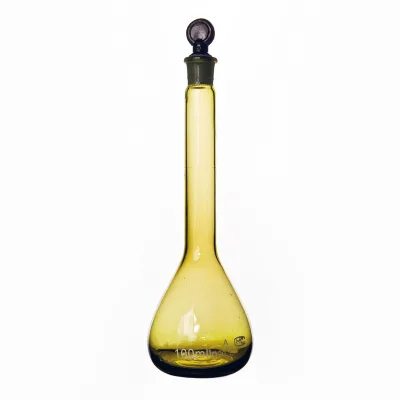
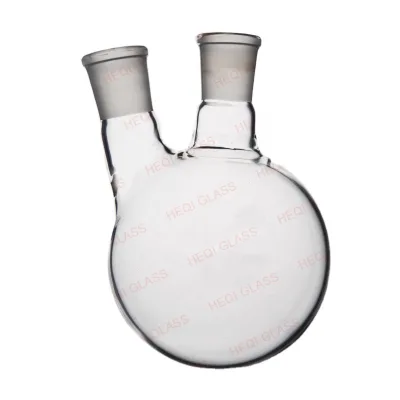
Comprehensive Sourcing Guide
Strategic Sourcing Guide for Laboratory Glassware Procurement
The term "elephant needlepoint flask" often appears in procurement searches as a specific descriptor for high-volume, specialized laboratory glassware, frequently associated with pear-shaped or Erlenmeyer designs used in titration and mixing applications. However, a rigorous analysis of the available market data reveals that the actual product landscape is defined by precise technical attributes rather than a single monolithic product type. Buyers must navigate a complex array of specifications, including model numbers like ST-GS5013, ST-GS5008, and SW-017451, to identify the correct vessel for their specific laboratory needs. This guide provides a disciplined approach to sourcing these items, focusing on verified facts regarding materials, certifications, and operational standards to ensure a compliant and efficient procurement process.
Technical Specifications and Material Integrity
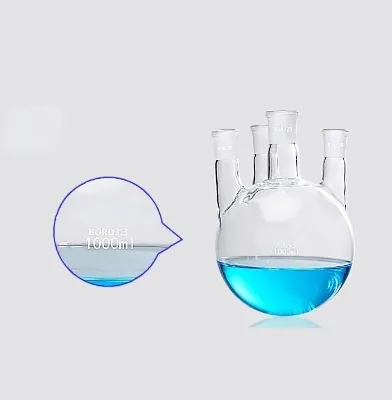
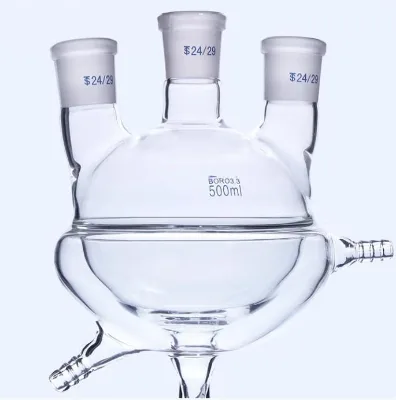
The foundation of any successful procurement for laboratory glassware lies in understanding the precise technical specifications of the vessel. The observed product data indicates a strong preference for Borosilicate Glass as the primary material, a choice driven by its superior thermal shock resistance and chemical durability compared to standard glass. This material property is critical for applications involving boiling, heating, or exposure to corrosive reagents. The "Pear Shape Flask" and "Erlenmeyer Flask" designations in the data suggest that the physical geometry is a primary differentiator. These shapes are engineered to minimize splashing during mixing while providing a large surface area for evaporation or reaction control.
Buyers must verify the specific size ranges available, as the market offers a wide spectrum of capacities. The documented standards include specific increments such as 10ml, 25ml, 50ml, 100ml, 250ml, 500ml, 1000ml, and extending up to 2000ml, 5000ml, and even 10000ml. The "Standard" field in the product data explicitly lists ranges like "5ml10000ml" and "25ml5000ml," indicating that suppliers often categorize their inventory by these broad capacity bands rather than a single fixed size. Furthermore, the "Bottom" attribute is frequently noted as "Round Bottom," which is essential for uniform heating in rotary evaporators or heating mantles. Dimensions are also critical; for instance, specific listings provide exact measurements such as "W130mm H190mm" for 100ml units and "W215mm H350mm" for 5000ml units. Procurement teams should cross-reference these physical dimensions with their laboratory's storage and equipment constraints to ensure compatibility.
Compliance, Certification, and Regulatory Standards
In the B2B laboratory supply chain, compliance is not merely a formality but a prerequisite for operational safety and legal adherence. The observed product data confirms that reputable suppliers in this sector typically hold ISO certification, a global standard for quality management systems. Additionally, specific listings mention a combination of RoHS, ISO, and CE certifications. RoHS compliance ensures that the glassware and any associated packaging materials are free from restricted hazardous substances, which is vital for environmental safety and disposal regulations. The CE mark indicates conformity with health, safety, and environmental protection standards for products sold within the European Economic Area, suggesting that the manufacturing processes meet rigorous European benchmarks.
Buyers should treat these certifications as verified observations of specific supplier capabilities rather than universal guarantees for every listed item. The presence of "OEM: Yes" and "Customization: Available" attributes suggests that suppliers are capable of adapting products to meet specific regulatory requirements, provided the buyer communicates these needs clearly. When evaluating potential partners, procurement officers must request current certification documents to verify that the ISO, RoHS, and CE statuses are active and applicable to the specific model numbers being ordered, such as ST-GS5001 or HHK170331. Relying on the generic presence of these terms without verification can lead to compliance gaps, particularly when importing goods into regions with strict chemical handling regulations.
Cost Drivers and Pricing Dynamics
The pricing structure for laboratory glassware is influenced by a complex interplay of factors, including material costs, manufacturing complexity, and order volume. The observed price range in the market spans from $0.20 to $1196.00 USD. This vast disparity highlights that the "elephant needlepoint flask" is not a single product but a category encompassing small, single-item purchases to large, bulk industrial orders. The lower end of the spectrum likely corresponds to smaller capacity flasks (e.g., 10ml to 100ml) sold as single units or in small packs, while the higher end reflects large-volume containers (e.g., 5000ml to 10000ml) or specialized custom configurations.
Minimum Order Quantity (MOQ) is a significant cost driver, with observed values ranging from 1 to 5000 units. A low MOQ of 10 units, as seen in specific product attributes, allows for smaller laboratory setups to procure stock without excessive capital outlay. Conversely, the ability to order up to 5000 units suggests that economies of scale are available for large institutions or distributors. The "Selling Units" attribute indicates that some items are sold as single units, while others may be packaged in cartons. Buyers must calculate the total cost of ownership, including shipping and packaging, as the "prod_packing" is consistently listed as "Carton" or "Carton Package." The single gross weight of 0.500 kg for certain items provides a baseline for logistics planning, but larger flasks will naturally incur higher freight costs. Understanding these variables is essential for budgeting and negotiating effectively with suppliers.
Typical Applications and Operational Use Cases
The intended usage of these flasks is explicitly defined in the product data as "Laboratory" and "Lab Testing." This broad categorization encompasses a wide range of scientific activities, from basic chemical titrations to complex boiling and distillation processes. The "Boiling Flask" designation points to applications requiring high thermal stability, where the Borosilicate Glass material becomes indispensable. The "Pear Shape" and "Erlenmeyer" geometries are particularly suited for mixing and swirling liquids without the risk of spillage, making them ideal for titration experiments where precise volume control is necessary.
Furthermore, the "Applications" attribute lists "Lab Testing," which implies a versatile utility across various disciplines, including chemistry, biology, and materials science. The "Disposable: Non-Disposable" attribute confirms that these are durable, reusable assets intended for long-term use, requiring careful handling and cleaning protocols. The "Warranty: 1 Year" offered by some suppliers indicates a confidence in the product's durability, suggesting that these flasks are built to withstand repeated use in demanding laboratory environments. Buyers should align their procurement with their specific operational needs; for instance, a facility performing high-temperature boiling will prioritize the "Round Bottom" and "Borosilicate Glass" attributes, while a facility focused on storage might prioritize the "Carton" packaging and specific dimensions.
Supplier Evaluation and Geographic Considerations
Evaluating suppliers requires a careful review of their geographic origins and production capabilities. The data indicates that the primary places of origin are China, with specific mentions of Shandong and Jiangxi provinces. These regions are known for their robust manufacturing bases for glassware and laboratory equipment. The "brand name" SWHG appears in the data, suggesting that some suppliers operate under established brand identities, while others may offer generic or OEM products. The "customized support: OEM" attribute confirms that suppliers are willing to produce goods under the buyer's brand, which is a valuable service for distributors and large institutions seeking to standardize their inventory.
When assessing suppliers, buyers should verify the "Delivery Time," which is listed as "10 Days After Payment" for certain items. This lead time is a critical factor in supply chain planning, especially for time-sensitive laboratory operations. The "place of origin" and "prod_origin" fields should be cross-referenced to ensure that the goods are sourced from facilities that adhere to the claimed certifications. Buyers should also consider the "Single package size" and "Single gross weight" to estimate shipping logistics accurately. A supplier offering a 19.0x13.0x13.0 cm package with a 0.500 kg weight provides a predictable shipping profile, whereas larger flasks with dimensions like 215mm x 350mm will require different freight arrangements.
Quality Control and Long-Term Procurement Strategy
Ensuring long-term quality requires a proactive approach to quality control (QC) and supplier relationship management. The "Standard" field in the data lists specific capacity ranges, which serves as a benchmark for quality verification. Buyers should implement a QC protocol that checks for physical defects, such as chips or cracks, and verifies that the glass thickness and transparency meet the "Transparent" attribute standard. The "prod_model" numbers, such as ST-GS5012 or 2512170848, serve as unique identifiers that should be included in all purchase orders to prevent mix-ups and ensure traceability.
For long-term procurement, establishing a relationship with suppliers who offer "Customization: Available" and "OEM: Yes" can provide a strategic advantage. This flexibility allows laboratories to adapt their glassware to specific experimental setups or branding requirements. The "Warranty: 1 Year" is a key indicator of supplier confidence and should be leveraged in contract negotiations to mitigate the risk of premature failure. Additionally, buyers should monitor the "MOQ" trends to optimize inventory levels, balancing the need for stock availability with the cost of holding excess inventory. By focusing on verified attributes like material composition, certification status, and dimensional accuracy, procurement teams can build a resilient supply chain that supports the ongoing needs of their laboratory operations.
Comparative Analysis of Product Attributes
To facilitate decision-making, the following table summarizes the key attributes observed in the market data, highlighting the variations that buyers must consider when selecting the appropriate flask.
| Attribute Category | Observed Values | Procurement Implication |
|---|---|---|
| Material | Borosilicate Glass, Glass | Prioritize Borosilicate for high-heat applications; verify "Glass" for general storage. |
| Shape/Type | Pear Shape, Erlenmeyer, Boiling Flask | Select based on mixing vs. heating requirements; "Round Bottom" for heating. |
| Capacity Range | 5ml~10000ml (Various specific models) | Match specific model numbers (e.g., ST-GS5001) to required volume ranges. |
| Certifications | ISO, RoHS, CE | Verify active status for compliance; essential for export and safety standards. |
| Customization | OEM Available, Customization Available | Leverage for branding and specific design needs; confirm lead time impacts. |
| Packaging | Carton, Carton Package | Check dimensions (e.g., 19.0x13.0x13.0 cm) for storage and shipping logistics. |
| Origin | China (Shandong, Jiangxi) | Assess logistics costs and lead times based on specific provincial origins. |
| Lead Time | 10 Days After Payment | Plan inventory replenishment cycles around this delivery window. |
This structured approach ensures that buyers can navigate the complexities of the laboratory glassware market with confidence, relying on verified data rather than assumptions. By focusing on these core attributes, organizations can secure high-quality, compliant, and cost-effective solutions for their laboratory needs.
FAQs
What material is used for elephant needlepoint flasks?
The primary material is Borosilicate Glass, chosen for its thermal shock resistance. Some listings also specify general Glass, but Borosilicate is preferred for boiling and high-heat laboratory applications.
Which certifications do these flasks typically hold?
Reputable products often carry ISO, RoHS, and CE certifications. These standards ensure quality management and safety compliance, though buyers should verify specific documents for each model number.
How is the delivery time for these flasks?
The standard delivery time is 10 days after payment. This lead time applies to confirmed orders, but actual schedules may vary based on order volume and specific supplier capabilities.
Can buyers request customization for these flasks?
Yes, customization and OEM support are available for many models. Buyers can request specific branding or modifications, provided they communicate their needs clearly to the supplier during the ordering process.
What is the minimum order quantity for these flasks?
The minimum order quantity ranges from 1 to 5000 units depending on the supplier. Specific listings show an MOQ of 10 units, allowing smaller labs to procure stock without excessive capital outlay.
Which capacity ranges are available for these flasks?
Available capacities range from 5ml up to 10000ml. Specific models cover increments like 10ml, 25ml, 50ml, and extend to large volumes such as 5000ml and 10000ml for industrial use.
Where are these flasks manufactured?
The products originate from China, with specific manufacturing hubs in Shandong and Jiangxi provinces. Buyers should verify the place of origin to ensure the supplier meets their geographic sourcing requirements.